
TL;DR - Too Long Didn't Read - the quick facts
Ok so you probably just came to this webpage from social media, and you want to know what this whole quarry thing is about, and what you can do about it, but you don't want to spend all day reading every document. So here's some tiny parts of documents to read :)
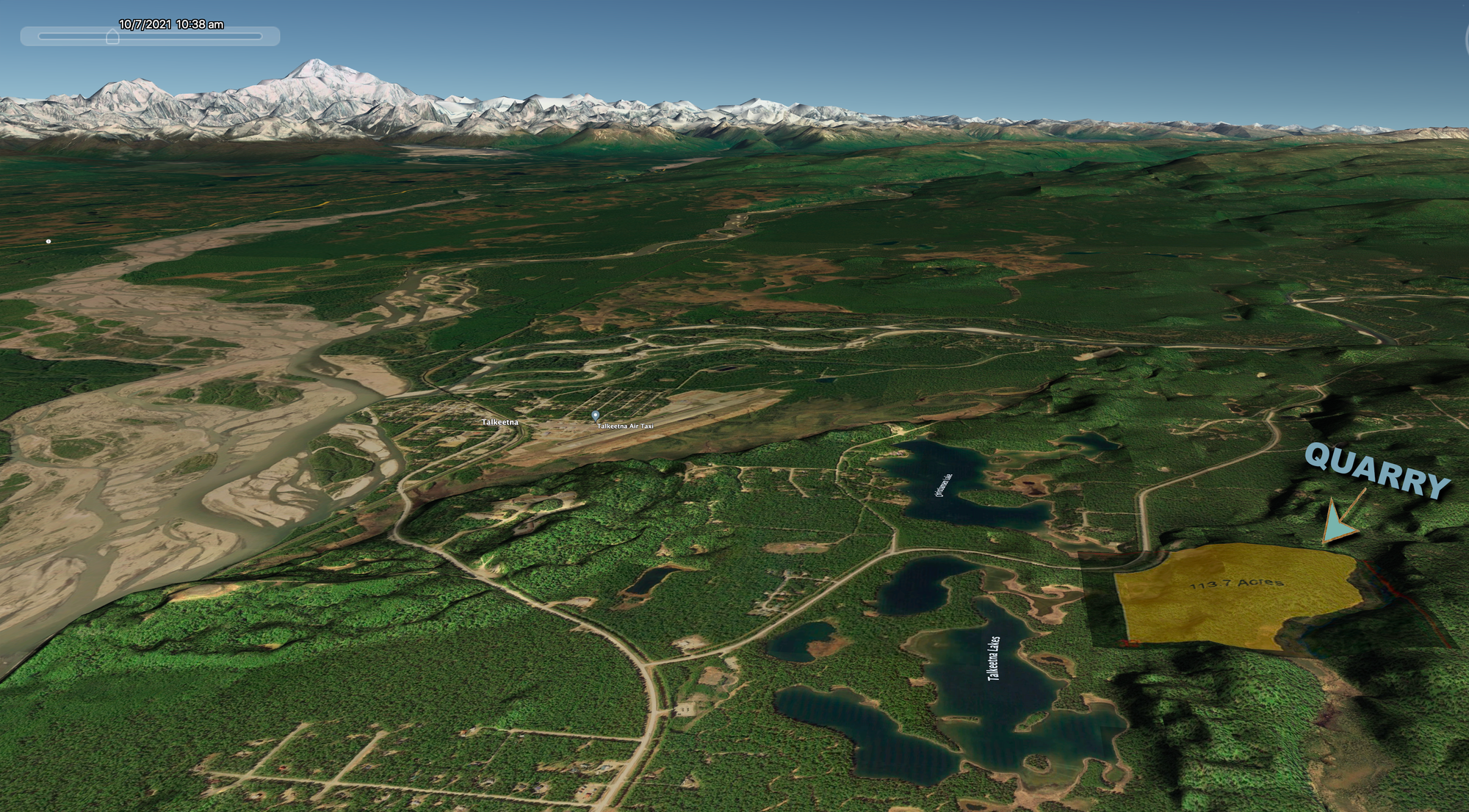
September 24th, 2021
The Department of Natural Resources (DNR) has decided to develop 113 acres as a state-owned, permanent materials (rock, gravel, etc.) extraction area they can use for any kind of project, forever. Once this becomes a "Designated Material Site", it's done. There is no ability to comment on the various projects, their scope, scale, or the industrial activities that take place there, ever again. It is best described by the actual text in the statute:
After decision and notice, the department may sell materials continuously, without further finding or notice, from that designated source or site under this section until the source or site is closed by the department.
taken from AS 38.05.550(b)
So, like what kind of projects?
The short answer is use your imagination. Here's a non fictional, completely realistic shortlist:
- Alaska Pipeline (LNG, etc...)
- Culverts for Western Susitna Road Expansion
- Roads to Resources
- New DOT Construction and Transportation Projects
- Operations and Maintenance for DOT existing projects, roads and Airports
- Sell off to Contractors such as Granite or QAP, etc...
- Lease the site to Private Corporations to operate as a commercial quarry
- Independent Contractor use like we've seen to date
- Or segregated for use by multiple independent Contractors
Beyond that, imagine anything else that comes up in the next 40 years. We can't possibly foresee all of the potential damage. No matter what, anything can be done for all 113 acres.
Think stuff like this:
They can do whatever they want. This is our only chance to say anything.
But what about the ILMA, I heard there is an ILMA, what's an ILMA?
Firstly, what is an ILMA?
- Interagency Land Management Assignment
Basically it's an agreement that allows DOT to manage the site.
An ILMA for the 113 acre site is currently proposed, and makes it look like the use of this "materials site" would be small in scope, because it's phrased as such for DOT's Operations and Maintenance. Actually, the Decision points to future projects, DOT's Construction division, and does not limit the region of use. However, if the interests of the State of Alaska are better served, they can choose to close the ILMA. They (the State) can then pivot to another way to use it. The underlying material site designation is permanent as we described earlier.
Ok, so what else could we use the land for?
There are alternative uses for this land, and they have been proposed; Public Recreation - dispersed, and Habitat. CALLA made this proposal for classification in April of 2021, expecting it to come before the public. The Mat-Su Borough supported this proposal in a letter to DNR.
This proposal would be compatible with all the surrounding land uses, and support the long term plan of Talkeetna, ensuring that we can create adequate accessible space for all people, residents and tourists alike, and build on our ecotourism market.
DNR denied this proposal in a private determination, sent only to CALLA, not publicly available for comment. There was an opportunity to appeal if you knew about it, but it would cost a person $200 to appeal. CALLA did appeal! So did the Mat-Su Borough! When DNR issued their September 24th, 2021 Preliminary Decision they did not disclose that alternative proposals were made and were under appeal. They did not want you to hear about it, or to comment on it. There is a history of that with this site.
So we told everyone we could find! And people gave us letters of support which CALLA submitted in our appeal package. CALLA delivered our appeal to DNR on September 20, 2021. Now Commissioner Corri Feige will review her agency's Determination of Denial and we will see what she says about it.
Who supports this alternate proposal of Public Recreation?
- The Mat-Su Borough
- The Talkeetna Community Council (TCCI)
- The Talkeetna Parks Advisory Committee
- The Comsat Quarry Committee
- Mat-Su Borough Trails and Parks Foundation
- The Talkeetna Chamber of Commerce
- The Chickaloon Village Tribal Council
- Renowned Economics Expert, Gunnar Knapp
- Many Business Owners and Residents of Talkeetna
An example of a great local company using this area specifically for ecotourism is Alaska Nature Guides
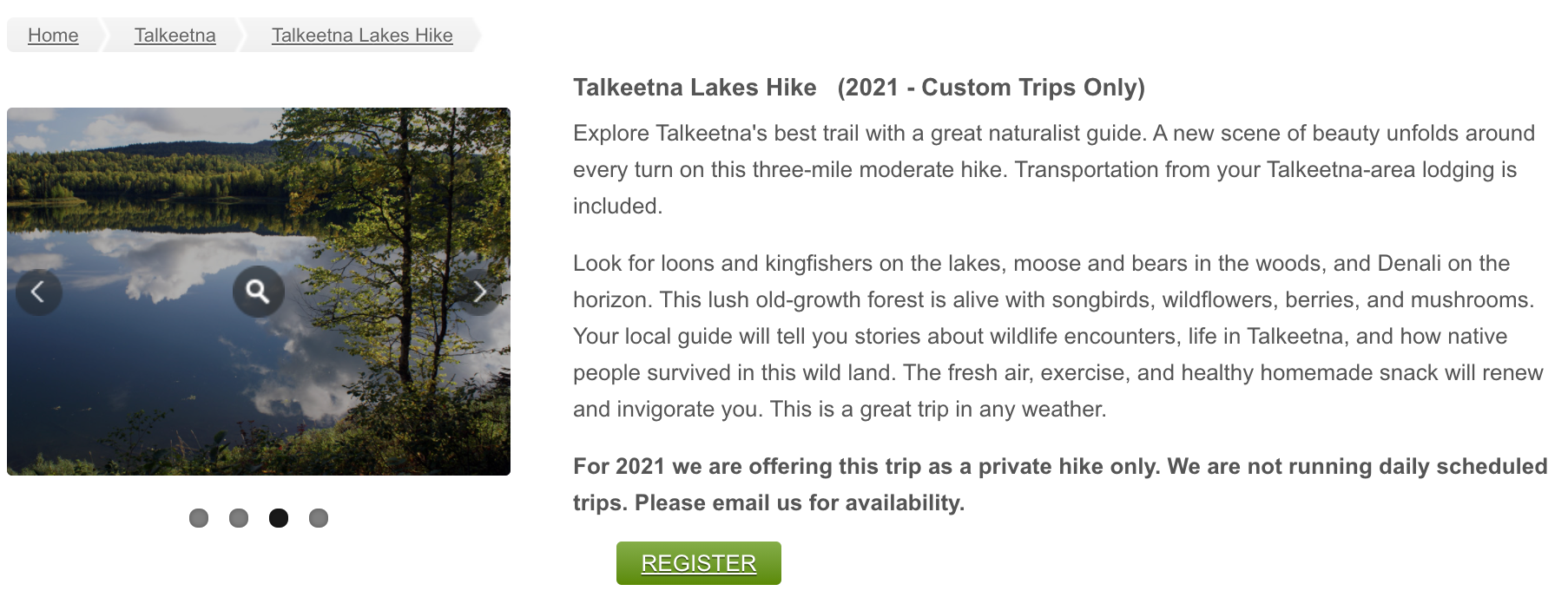
Is Conservation and Ecotourism helpful? Should we support it?
In the Alaska State Constitution it says:
The legislature shall provide for the utilization, development, and conservation of all natural resources belonging to the State, including land and waters, for the maximum benefit of its people.
The Alaska Supreme Court has said:
“The terms ‘conserving’ and ‘developing’ both embody concepts of utilization of resources. ‘Conserving’ implies controlled utilization of a resource to prevent its exploitation, destruction or neglect. ‘Developing’ connotes management of a resource to make it available for use”
When DNR made their Preliminary Decision, they considered three things:
- Direct economic benefits to the State
- Indirect economic benefits to the State
- Encouragement of resource development
So DNR is missing the element of conservation in their consideration of utilization for the land, and if this is the maximum benefit for the people of Alaska.
Economically, it sure makes sense. The following info is from the Alaska Trails Initiative, specifically this PDF:
$412 BILLION - Outdoor recreation is the “Sleeping Giant of The US Economy,” providing 2.2% of the total US GDP, larger than fishing, farming, forestry, utilities, or telecommunications.
$3.2 BILLION - Annual in-state spending tied to AK’s outdoor industry
DEMAND FOR NATURE WALKS & HIKING - The fastest growing activity for both air and cruise out-of-state Alaska visitors 2011-2016
$137 MILLION/YEAR - Extra spending if even just half of visitors added "ONE MORE DAY” (OMD) to their AK trip
TRAIL USERS SPEND MORE, STAY LONGER - International tourists to New Zealand who participate in walking and hiking spend $3600/trip vs. $2800 spent by all holiday visitors. The average stay in New Zealand is 19 days; in Alaska 9 days
Additionally, the outdoor recreation in Alaska creates 38,100 direct, indirect or induced jobs.
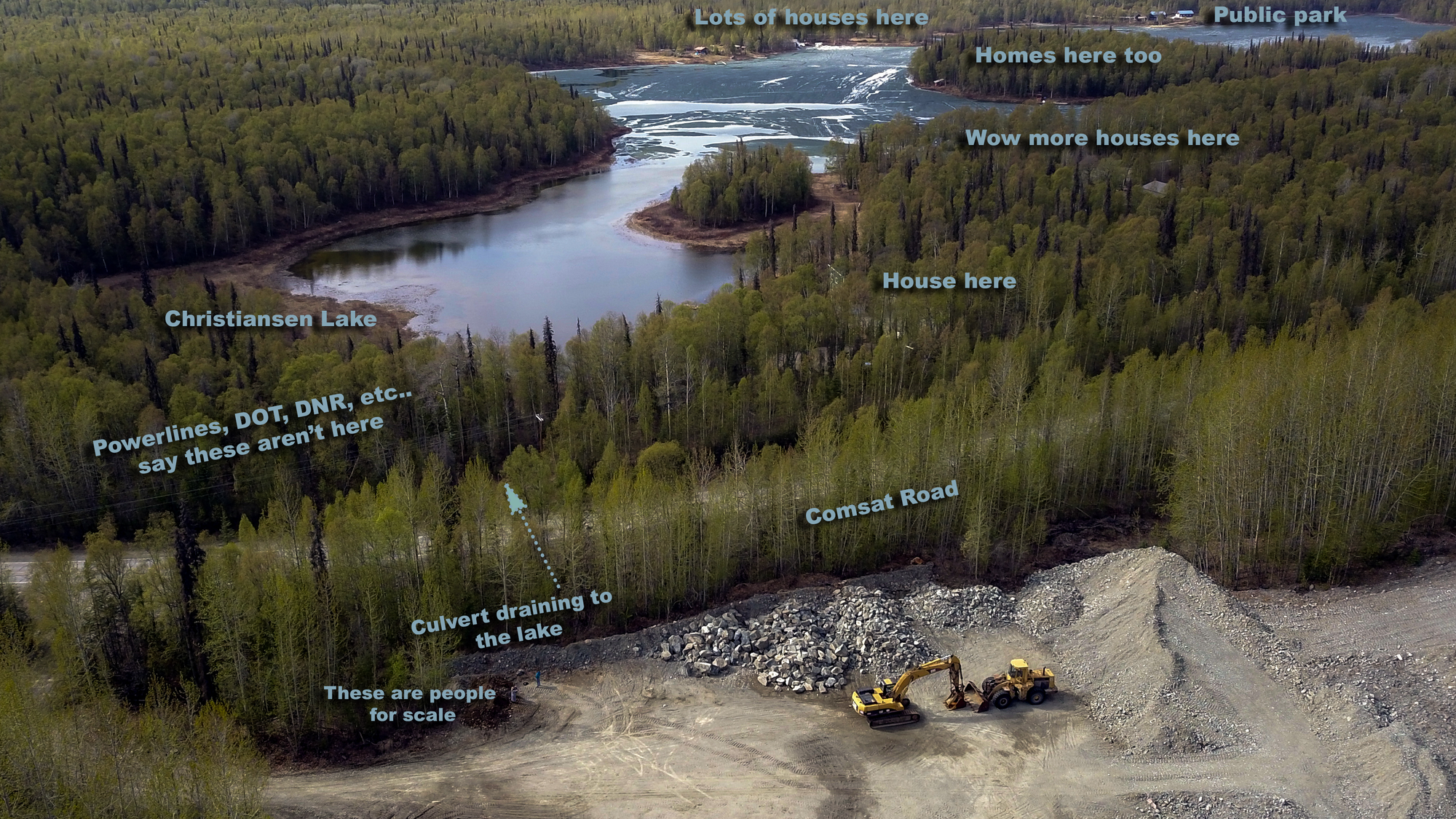
This is a picture taken from the top of the northern edge of the area, and adds some color to what is around it, and as well shows a few things that DOT and DNR claim do not exist
Supporting Materials, Appendix, etc...
These are some statutes from the Alaska State Legislature that we quoted, or would quote, and speak to what the law says about this process:
AS 38.05.550(b)
(b) Materials may only be sold or removed from sources or sites designated by the department. The department shall issue a decision under AS 38.05.035(e) that the sale and extraction of materials from that location is in the best interests of the state at the time each source or site is designated. The department shall give notice, in accordance with AS 38.05.945, of the department's decision to designate a source or site for the sale and extraction of materials. After decision and notice, the department may sell materials continuously, without further finding or notice, from that designated source or site under this section until the source or site is closed by the department.
AS 38.05.035(e)
(e) The director may renew a lease issued under this section, AS 38.05.075, or 38.05.810 upon its expiration if the lease is in good standing and the lease renewal is determined to be in the best interests of the state. A renewal issued under this subsection is not subject to AS 38.05.035(e). A lease may be renewed only once for a term not longer than the initial term of the lease. The director shall provide notice of the lease renewal decision.
These are excerpts from the Alaska State Constitution Citizens Guide:
Alaska Constitution Article 8 Natural Resources Section 1
Section 1. Statement of Policy
It is the policy of the State to encourage the settlement of its land and the development of its resources by making them available for maximum use consistent with the public interest.
This is an emphatic statement that the policy of the state is to encourage the development of its land and resources, but in a manner that recognizes the collective interests of the people as the owners of these lands and resources. The meaning of the phrase “consistent with the public interest” is found elsewhere in this article. For example, it means that the principles of conservation must govern resource management (Sections 2 and 4); that everyone should be treated equally by management rules, particularly rules adopted in the interests of conservation that limit the access of some groups to certain resources (Sections 3, 15, 16 and 17); and that the public must be notified of all disposals of public land and resources, which may occur only according to the terms of general laws (Sections 8, 9 and 10). The delegates wanted the state’s resources developed, not plundered. At the time of the convention, a current of opinion in Alaska was that corporate developments such as the Kennecott copper mine made insufficient lasting social and economic contributions to the territory, and that absentee owners of fish traps had unfair, exclusive rights of access to Alaska’s salmon and were depleting the resource in their single-minded quest for profits.
Section 2. General Authority
The legislature shall provide for the utilization, development, and conservation of all natural resources belonging to the State, including land and waters, for the maximum benefit of its people.
This section is a broad grant of legislative authority to implement the policy enunciated in Section 1. The original resource article of the Hawaii constitution written in 1950 began with a similar provision: “The legislature shall promote the conservation, development and utilization of agricultural resources, and fish, mineral, forest, water, land, game and other natural resources” (Article X, Section 1 of the 1950 constitution). In addition to utilization and development, conservation appears as an objective of resource management. The delegates understood the term in its traditional sense of “wise use.” The Alaska Supreme Court has said: “The terms ‘conserving’ and ‘developing’ both embody concepts of utilization of resources. ‘Conserving’ implies controlled utilization of a resource to prevent its exploitation, destruction or neglect. ‘Developing’ connotes management of a resource to make it available for use” (Kenai Peninsula Fisherman’s Co-op Association v. State, 628 P.2d 897, 1981).
Now that you have read this, go make a public comment!